

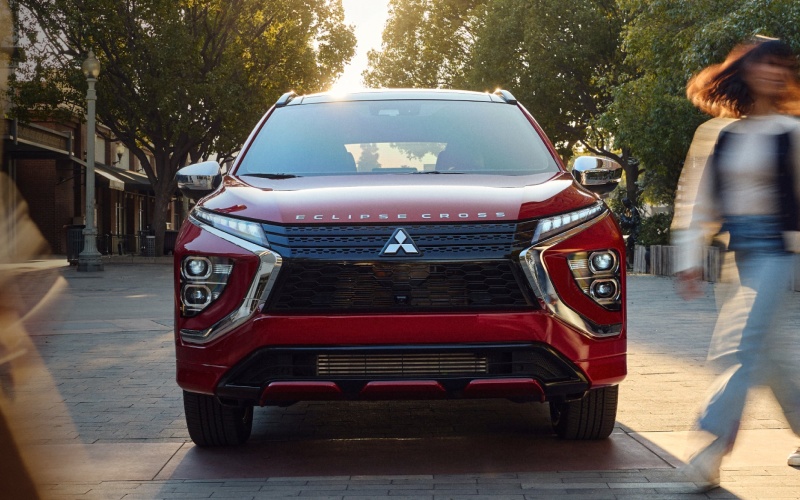
South Dallas Mitsubishi - Which SUV has the smarter all-wheel system for Arlington, TX — the 2026 Eclipse Cross or the 2026 Rogue?
Shoppers across North Texas often ask a straightforward question with a big impact on daily driving: which compact SUV has the smarter all-wheel system — the 2026 Mitsubishi Eclipse Cross with Super-All Wheel Control (S-AWC) or the 2026 Nissan Rogue with available Intelligent All-Wheel Drive? It is a great question for Arlington, TX drivers who split time between smooth parkway stretches, older neighborhood streets with patchwork asphalt, and occasional gravel or wet grass near trailheads.
Short answer: both systems improve traction, but S-AWC layers in additional control logic you can feel when the surface gets inconsistent. That extra composure is exactly why many shoppers favor the Eclipse Cross after back-to-back test drives.
How S-AWC in the Eclipse Cross works
Mitsubishi’s S-AWC starts with a capable all-wheel hardware setup, then adds software and brake-based torque vectoring that help the SUV rotate naturally and hold a cleaner line. It monitors driver inputs and wheel speeds, then coordinates power distribution with yaw control to enhance stability. In practical terms, S-AWC gives you confidence in three places Arlington drivers notice most: off-camber freeway ramps, broken pavement at low speeds, and slick patches where early traction recovery prevents that “floaty” moment.
- Cornering Precision: Brake-based torque vectoring helps the Eclipse Cross turn in predictably and settle quickly after mid-corner bumps.
- Mode Flexibility: Choose Normal for balanced response, Gravel or Snow for low-friction surfaces, or ECO to prioritize efficiency.
- Consistency You Can Feel: Subtle corrections reduce steering input corrections, making the SUV feel calm without numbing feedback.
How Rogue’s available Intelligent All-Wheel Drive works
Nissan’s system smartly varies front-to-rear torque to improve traction. It is responsive and well tuned for rain-soaked commutes and light-packed dirt. When conditions change quickly, it is effective at sending power rearward to steady the vehicle. Where it differs is in the deeper coordination of brake-based yaw control that S-AWC leverages to guide cornering and reduce the need for steering adjustments through mid-turn imperfections.
- On-Demand Traction: Shifts torque to the rear when slip is detected to improve straight-line grip.
- Drive Modes: With AWD, Snow and Off-Road modes supplement the standard Auto, Eco, and Sport settings for varying conditions.
- Everyday Confidence: Solid performance for rain and light gravel, especially when paired with driver assistance features.
What to test on your Arlington, TX drive
The key is to evaluate composure, not just initial traction. On your loop, include a highway ramp with uneven expansion joints, a few neighborhood speed humps, and a quick lane change over patched pavement. In the Eclipse Cross, notice how S-AWC gently reins in the body and brings the SUV back on line with minimal extra steering. In the Rogue, feel for any additional corrections you make as the surface changes. Both will inspire confidence; the Mitsubishi typically feels more settled through a wider range of small disruptions.
Technology and safety context
Beyond traction, both SUVs bring excellent driver assistance. The Eclipse Cross offers Forward Collision Mitigation with Pedestrian Detection, Lane Departure Warning, Blind Spot Warning with Lane Change Assist, Rear Cross Traffic Alert, and an available Multi-View Camera System. Rogue comes standard with Safety Shield 360, and available ProPILOT Assist adds hands-on lane centering and adaptive cruise. From a usability standpoint, the Eclipse Cross favors clear menus and a straightforward interface with wireless Apple CarPlay and Android Auto available. Rogue’s large screens and Google built-in available on select trims are appealing for tech-forward drivers.
Ownership and peace of mind
Warranty and maintenance matter to most households. Mitsubishi backs Eclipse Cross with an industry-leading 10-year/100,000-mile Powertrain Limited Warranty and includes 2-Year/30,000-Mile Limited Maintenance. That combination removes a lot of uncertainty during the years you own the vehicle. The Rogue provides a mainstream coverage package that is competitive for the segment, but it does not match Mitsubishi’s length or included maintenance interval.
Who should pick which?
If you value the surefooted feel that makes short errands and long freeway stints equally calm, S-AWC gives the Eclipse Cross an edge you are likely to notice right away. If you prefer a broader array of display options, the Rogue’s tech mix may speak to you — especially when you spec it for the largest screens and enhanced camera views.
Frequently Asked Questions:
Does S-AWC help on dry pavement or only in slippery conditions?
S-AWC is beneficial all the time. On dry surfaces it improves cornering stability and steering precision, and on low-friction surfaces it adds traction and control while accelerating and turning.
Is the Rogue’s available Intelligent All-Wheel Drive good enough for everyday Arlington driving?
Yes, it delivers solid traction for wet commutes and light off-pavement needs. The Eclipse Cross’s S-AWC, however, tends to feel more composed in mixed conditions thanks to its integrated yaw and torque vectoring strategy.
Which SUV is easier to park and maneuver in tight lots?
The Eclipse Cross has a tidier footprint, which helps in smaller spaces, angled spots, and older garages. Both offer camera systems to aid low-speed maneuvering, with a Multi-View Camera System available on the Mitsubishi and an Intelligent Around View Monitor available on the Nissan.
Ready to compare them back to back? South Dallas Mitsubishi is serving Garland, Plano, and Arlington with expert guidance and thoughtful test routes that highlight exactly how each AWD system behaves on the roads you drive every day. One visit is often all it takes to feel why many Arlington shoppers gravitate to the Eclipse Cross for its extra layer of calm and control.
Request more 2026 Mitsubishi Eclipse Cross information
Categories:
Mitsubishi Eclipse Cross